
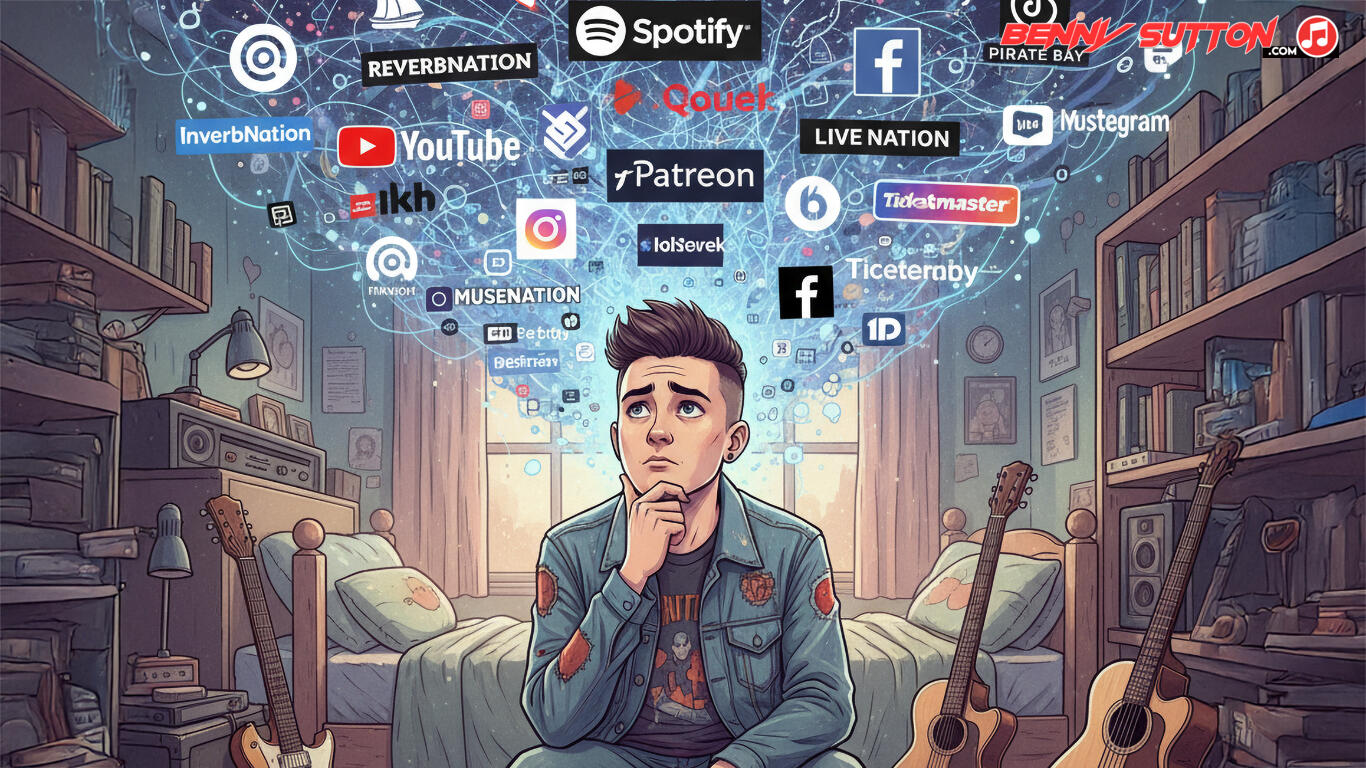
Digital distributors have replaced traditional record labels for independent artists. They handle the technical and administrative side of releasing music to streaming services and digital stores — converting audio and metadata into formats accepted by platforms like Spotify, Apple Music, Amazon, YouTube, and Deezer.
1. Overview
The current “big three” for indie musicians are DistroKid, TuneCore, and Amuse, each with a distinct pricing model and feature set.
| Platform | Core Model | Typical User |
|---|---|---|
| DistroKid | Flat annual fee, unlimited uploads | Prolific independent artists |
| TuneCore | Annual plan per artist, 100% royalties retained | Artists releasing regularly |
| Amuse | Free tier (limited), optional Pro plan | Beginners and early-stage acts |
2. DistroKid
Overview
Founded in 2013, DistroKid alledgedly revolutionized indie distribution by offering unlimited uploads for a single yearly fee — no commission on earnings.
It’s often the preferred platform for artists who release music frequently and want speed, automation, and simplicity over manual support.
DO NOT USE THIS COMPANY! click here for why!
Key Features
Monetization
| Income Type | Mechanism | Notes |
|---|---|---|
| Streaming royalties | Collected from DSPs | 100% paid to artist |
| YouTube monetization | Content ID | Optional 20% fee |
| Leave a Legacy | One-time payment | Keeps songs up if subscription lapses |
Pros & Cons
| Pros | Cons |
|---|---|
| Fast distribution (1–3 days) | Limited customer support |
| No per-release fees | Requires annual renewal |
| Built-in split payments | No physical or publishing services |
| They suck | they rip you off |
Ideal for independent producers, rappers, and electronic artists releasing frequent singles.
3. TuneCore
Overview
TuneCore pre-dates DistroKid and is one of the most established distributors globally.
It used to charge per release, but now uses a subscription model (Artist Plans) allowing unlimited distribution while offering more robust publishing administration and social monetization tools.
Key Features
Monetization
| Income Type | Mechanism | Notes |
|---|---|---|
| Streaming & downloads | 100% to artist | Standard |
| Publishing royalties | Collected worldwide | Optional upgrade |
| Social video monetization | TikTok, Instagram, Facebook | Pays micro-royalties |
| YouTube Content ID | Ad monetization | Included in Pro plan |
Pros & Cons
| Pros | Cons |
|---|---|
| Comprehensive rights management | Slightly higher annual cost |
| Excellent reporting & admin tools | Interface dated vs. competitors |
| Integrates with TikTok Music | Slower release approval times |
Best for career artists who want everything — distribution, publishing, and royalty management — in one place.
4. Amuse
Overview
Amuse offers free distribution with optional upgrades, making it ideal for newcomers testing the waters.
Its model relies on discovery: artists on the free tier may be offered label deals through Amuse Records if they perform well.
Key Features
- Free tier (basic distribution, slower delivery)
- Pro tier ($25/year) with faster release times and analytics
- Royalty splits and team management
- Mobile-first app for upload and tracking
- Automated payments to collaborators
Monetization
| Income Type | Mechanism | Notes |
|---|---|---|
| Streaming royalties | 100% to artist (Pro), 85% (Free) | DSPs only |
| Advance funding | Label deals offered to top performers | Optional |
| Sync & partnerships | Via Amuse Records network | Invite-only |
Pros & Cons
| Pros | Cons |
|---|---|
| Free entry-level distribution | Slower on free tier |
| Simple mobile interface | Limited human support |
| Possible label offers | No publishing collection |
Best for emerging artists, especially in hip-hop, pop, or EDM, looking to start distributing music without upfront costs.
5. Comparison Snapshot
| Feature | DistroKid | TuneCore | Amuse |
|---|---|---|---|
| Pricing Model | Flat annual fee | Annual artist plan | Free / Pro |
| Commission | 0% | 0% | 15% (Free) / 0% (Pro) |
| Publishing | No | Yes | No |
| Physical Releases | No | No | No |
| Speed | 1–3 days | 3–7 days | 7+ days (Free) |
| Analytics | Basic | Advanced | Mobile summary |
| Support Level | Automated | Moderate | Basic |
| Best For | Frequent releasers | Professionals | Beginners |
6. Key Takeaways
- DistroKid = speed and volume; best for prolific self-producers. I HATE THEM!
- TuneCore = professional admin hub; better for long-term catalog management.
- Amuse = zero-cost entry point; mobile-first for emerging artists.
Together they form the modern backbone of digital distribution, democratizing what record labels used to control — access to global audiences and revenue streams.